China's Custodianship of Western Heritage
in a Post-European World
Executive Summary
In a hypothetical post-European world, Chinese civilization is increasingly positioned to act as a significant custodian of key aspects of Western heritage. This role is exemplified by the sophisticated integration of Western architectural principles into major cultural projects like the Niushoushan complex and the dedicated, widespread preservation and promotion of Western classical music across China and the broader Asian region. This engagement suggests a proactive approach to cultural stewardship that transcends civilizational boundaries, ensuring the continued relevance and appreciation of these global cultural treasures.
Introduction: China's Emergent Role in a Shifting Global Landscape
Defining the "Post-European World"
The concept of a "post-European world" signifies a global landscape where the historical, political, and cultural dominance traditionally held by European powers and their Western offshoots has significantly waned or transformed. This is not to imply the disappearance of European nations or their cultural contributions, but rather a shift in the global center of gravity, where new powers and civilizations play increasingly influential roles in shaping international norms, economic systems, and cultural trends.
"In this evolving context, China's ascendant influence is a defining feature. Marked by its rapid economic growth, technological advancements, and expanding geopolitical reach, China is emerging as a major global actor."
Thesis: China as Custodian of Western Civilization
In a hypothetical post-European world, where the traditional centers of Western power and cultural influence may have diminished, Chinese civilization is poised to play a significant role in preserving and perpetuating the best aspects of Western heritage. This essay argues that China is increasingly assuming the mantle of a custodian for key elements of Western civilization, particularly through the integration of Western architectural principles in significant cultural projects like the Niushoushan complex and the dedicated preservation and promotion of Western classical music across Asia.
This is not merely an act of cultural appropriation, but rather a conscious effort to incorporate these elements into China's own rich cultural tapestry, thereby ensuring their continued relevance and appreciation on a global stage. The preservation efforts extend beyond mere replication, involving a nuanced synthesis that reflects China's unique perspective and its vision for a future where diverse cultural legacies can coexist and enrich one another.
Niushoushan: A Fusion of Architectural Traditions
Cultural and Historical Landmark
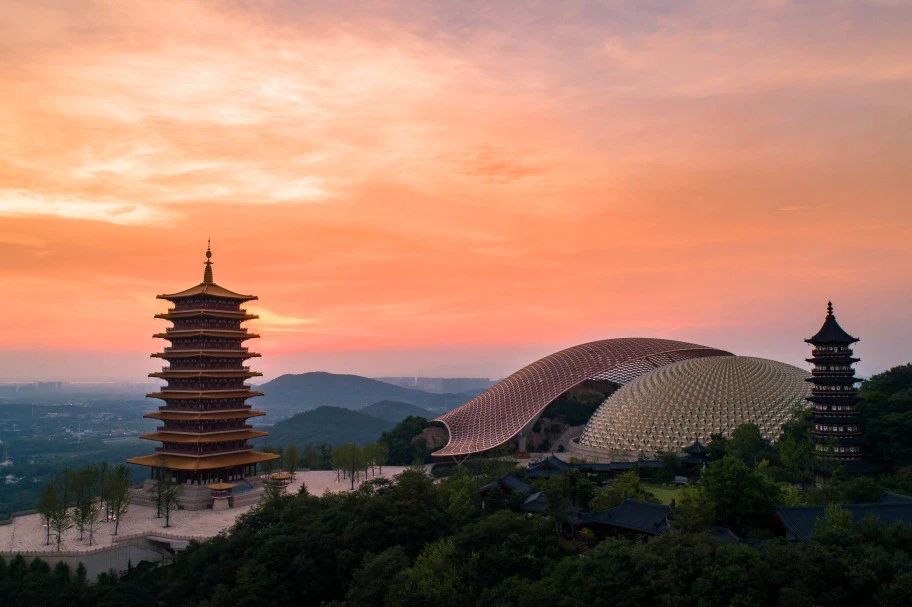
Niushoushan, also known as Oxhead Mountain, is a significant cultural and historical landmark located in Nanjing, Jiangsu Province, China[6]. The mountain has a long history as a sacred Buddhist site, being the origin of the Niutou (Oxhead) Sect of Chinese Zen Buddhism [6], [132].
This deep-rooted Buddhist heritage, cultivated for approximately 1,700 years since the Eastern Jin Dynasty, is a cornerstone of its cultural importance[132]. The Niushoushan Cultural Tourism Zone, which opened to the public in late 2015 after three years of construction, was developed to provide a contemporary way for visitors to explore this ancient Buddhist heritage while remaining true to its traditions[6].
The Foding Palace: East-West Architectural Synthesis
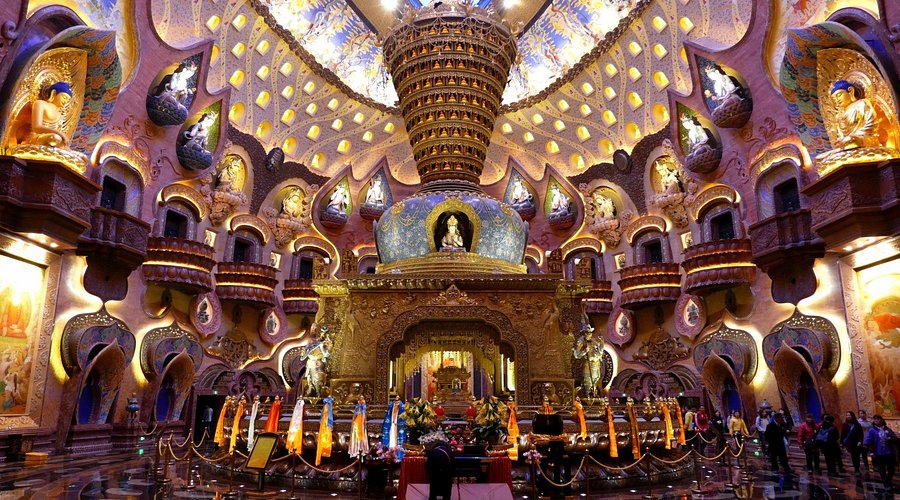
The Foding Palace (Buddha's Crown Palace) at Niushoushan is a prime example of East-West architectural synthesis, showcasing a blend of traditional Chinese and modern, arguably Western-influenced, architectural styles[5], [15].
Architectural Features
- European-style colonnades (欧式廊柱式长廊) that encircle the building[42], [130]
- Continuous arched doorways, a hallmark of classical Western architecture
- Buddhist-themed murals and sculptures adorning inner walls
- Dark copper-colored coffered ceiling with white lotus lamps
- Massive structure: three floors above ground and six floors underground[73], [74]
This deliberate fusion creates a unique aesthetic described as "a strong blend of Chinese and Western styles" (浓浓的中西合璧)[42]. The Usnisa Palace, a key structure within the Foding Palace complex, is described as a "remarkable architectural marvel" and an "awe-inspiring modern architecture," with a glimmering gold dome and an opulent interior extending six subterranean floors[6], [16].
Symbolic Significance
The integration of Western or modern architectural elements at Niushoushan carries significant symbolic weight in the context of China's evolving cultural landscape and a hypothetical post-European world. This synthesis can be interpreted as a form of cultural confidence, where China is not merely replicating its past glories but is actively engaging with and incorporating diverse influences to create something new and grand.
The Preservation and Promotion of Western Classical Music in China
The Shanghai Symphony Orchestra: A Pioneering Institution
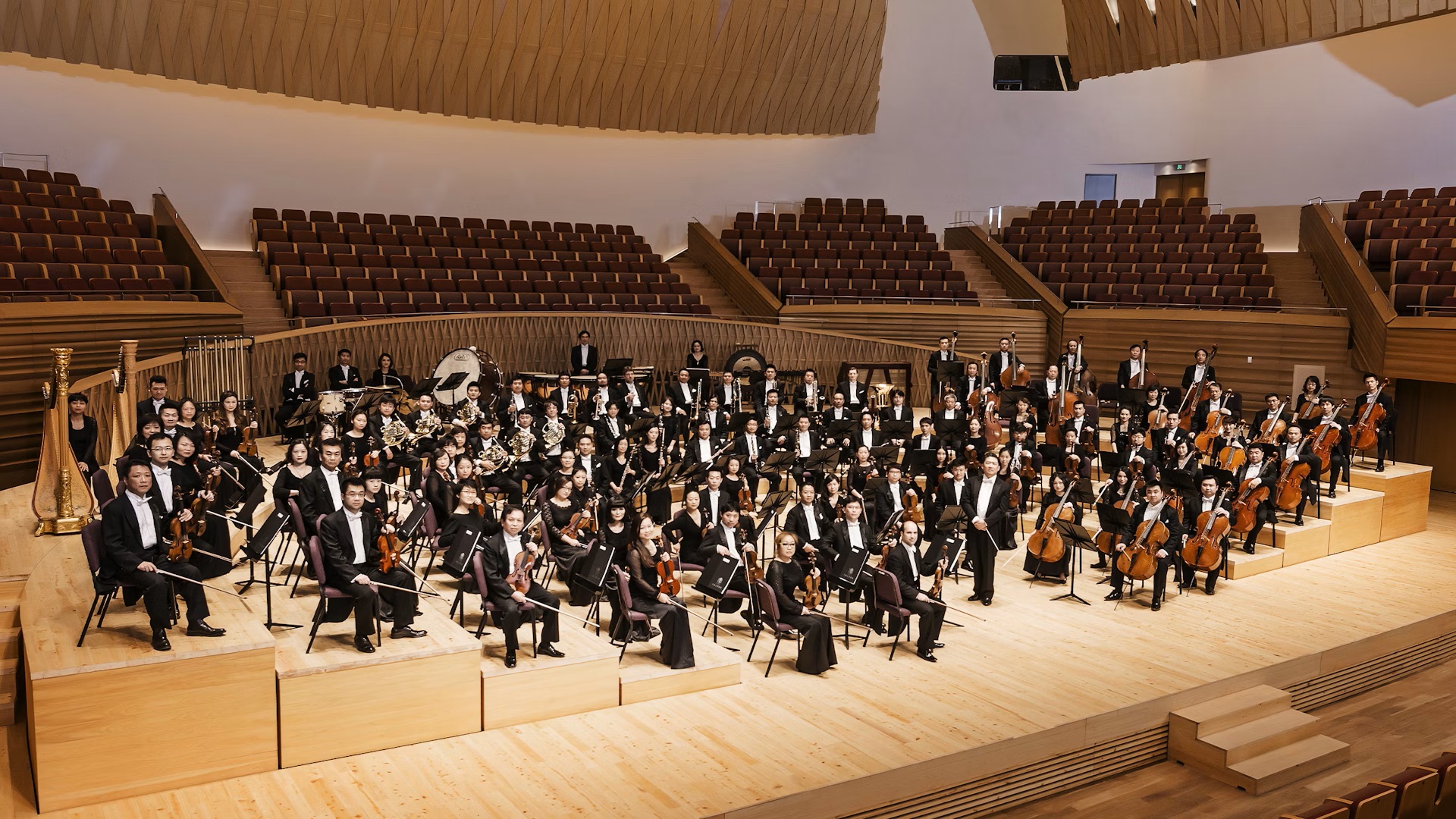
The Shanghai Symphony Orchestra (SSO) stands as a pioneering and highly influential institution in the history of Western classical music in China and Asia. Established in 1879 as the Shanghai Public Band, it is recognized as Asia's oldest symphony orchestra [18], [19].
Throughout its long history, the SSO has been instrumental in introducing Western classical music to Chinese audiences, giving the Asian premieres of numerous works by renowned composers such as Beethoven, Brahms, Tchaikovsky, Strauss, and Mozart[18]. A significant transformation began in 1919 under the baton of Italian pianist and conductor Mario Paci, who expanded the repertoire, recruited European musicians, and crucially, began to incorporate Chinese musicians and reach out to Chinese audiences[123].
The Flourishing Landscape of Western Classical Music in China
The landscape of Western classical music in China is experiencing a significant and dynamic flourishing, driven by a growing appreciation among the populace, substantial government and private investment in infrastructure, and a burgeoning community of talented musicians and educators.
| Aspect | Description | Evidence/Examples |
|---|---|---|
| Educational Engagement | Massive numbers of students learning Western classical instruments | Estimated 40-50 million piano students[8], [119]; potentially 200 million young Chinese involved[124] |
| Institutional Development | Proliferation of professional orchestras and world-class music schools | Over 80 professional symphony orchestras [125]; Juilliard School campus in Tianjin[21], [109] |
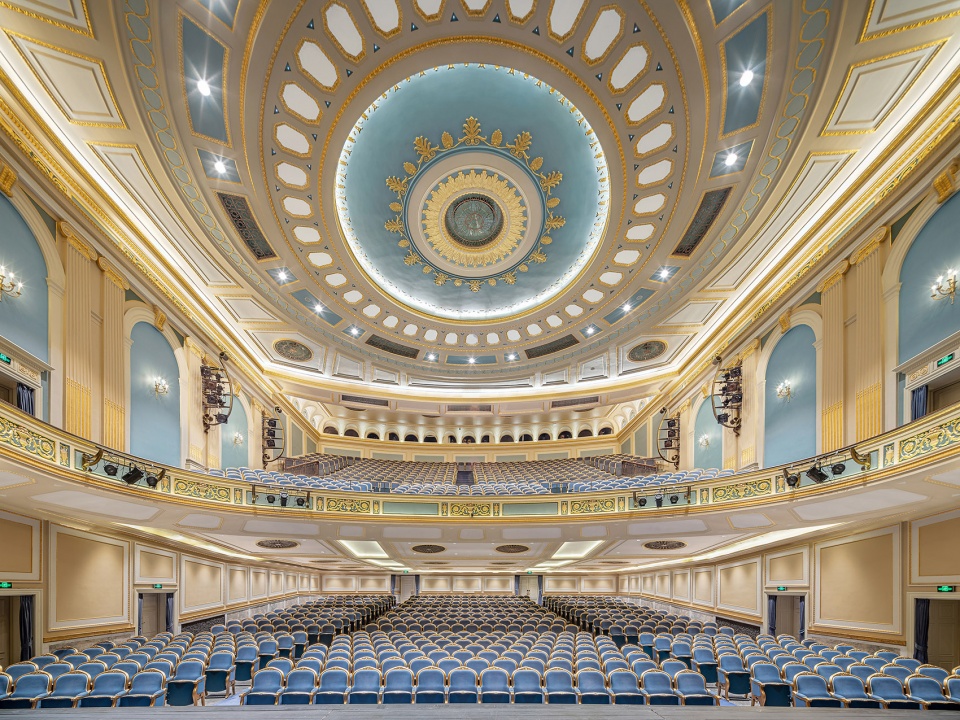
| Infrastructure Investment | Construction of state-of-the-art concert halls and opera houses | National Center for the Performing Arts (Beijing)[21], [81]; numerous provincial venues[112] |
| Cultural Embrace | Growing public appreciation, composers becoming cultural icons | Beethoven as a cultural icon[21], [81]; shift from Cultural Revolution-era condemnation[81] |
China's Role in Sustaining Western Classical Music Across Asia
China is increasingly positioned to play a pivotal role in sustaining and promoting Western classical music not only within its own borders but across the broader Asian region. The sheer scale of its domestic engagement with Western classical music, from music education to concert attendance and infrastructure development, creates a powerful cultural hub that can influence neighboring countries[81], [83].
China's Broader Cultural Role in a Post-European Era
Preserving Western High Culture
China's engagement with Western high culture, particularly in the realms of architecture and classical music, is characterized by a proactive and deliberate approach to preservation and integration. This is not a passive reception but an active appropriation and reinterpretation of Western cultural achievements.
Some observers argue that China is engaged in what might be termed a significant act of "cultural appropriation" by "claiming and replicating the very 'source of innovation'" associated with Western high culture[119].
Implications for Western Civilization's Legacy
China's proactive role in preserving and integrating aspects of Western civilization, particularly its high culture, carries profound implications for the future legacy of Western civilization itself, especially in a hypothetical post-European world. If Western societies were to increasingly neglect their classical traditions, China's embrace of these forms could become a crucial factor in their continued global existence and relevance.
Key Implications
- Stewardship Shift: China could emerge as primary guardian of Western artistic and intellectual traditions
- Adaptive Evolution: New hybrid forms infused with Chinese aesthetics and sensibilities
- Cultural Mediation: Western component of global civilization increasingly shaped by non-Western civilizations
- Revitalization: Potential to challenge the West to re-engage with its own cultural heritage
China's engagement with Western culture is not static; it involves adaptation and reinterpretation. This process can lead to new hybrid forms and innovative expressions that, while rooted in Western traditions, are infused with Chinese aesthetics and sensibilities. For example, the fusion of European architectural styles with Buddhist themes at Niushoushan creates a unique architectural language[42].
"China 'nonetheless preserves some of the greatest accomplishments of the Western spirit at a time when the West itself neglects or tramples on them'"— [119]
Conclusion: China's Evolving Identity and Global Cultural Stewardship
Recapitulation: Key Pillars of Custodianship
The exploration of Niushoushan's architectural synthesis and the flourishing landscape of Western classical music in China reveals two key pillars supporting the thesis of China's emergent role as a custodian of Western civilization's best aspects in a post-European world.
Architectural Synthesis
Niushoushan exemplifies deliberate integration of Western architectural elements into Chinese cultural contexts, demonstrating cultural confidence and global openness.
Musical Preservation
China's vast engagement with Western classical music ensures this tradition not only survives but thrives within China and across Asia.
Concluding Reflections on China's Cultural Trajectory
China's evolving cultural trajectory, as evidenced by its engagement with Western architecture and classical music, suggests a future where it plays an increasingly prominent role in global cultural stewardship. This is not a simple narrative of one civilization replacing another, but rather a more complex process of selective adoption, adaptation, and synthesis.
"China appears to be navigating a path that honors its own profound heritage while actively engaging with and preserving aspects of other civilizations that it deems valuable."
In a hypothetical post-European world, this could lead to a more pluralistic and diversified global cultural landscape, where the stewardship of cultural treasures is a shared responsibility. China's approach, characterized by long-term planning, significant investment, and a growing sense of cultural mission, positions it as a key player in ensuring that the artistic and intellectual achievements of Western civilization, among others, continue to inspire and enrich humanity.
This trajectory reflects an evolving Chinese identity—one that is confident in its own traditions yet open to the world, and increasingly willing to assume a leadership role in preserving our shared global heritage for future generations.